
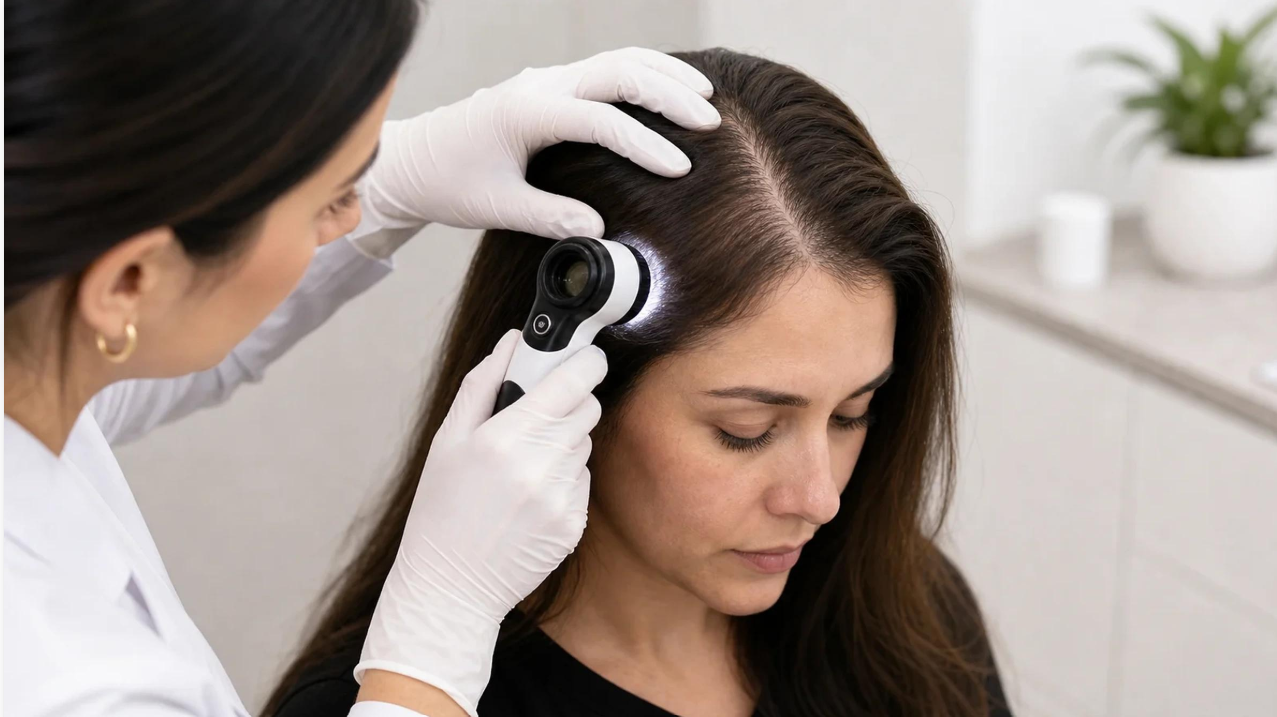
Hair Restoration Education
Understanding PRP for Hair Restoration
Learn about common patterns of hair thinning, how PRP is being studied for hair density, and what to consider before treatment.
The First Step
Understanding Common Patterns of Hair Thinning
Hair thinning has many possible causes. Identifying the underlying cause is important before selecting any treatment. Common causes include genetics, stress, nutritional factors, medical conditions, medications, and hormonal changes. A proper evaluation helps determine the most appropriate approach for you.
The Science
How PRP May Support Hair Density
PRP is being studied for its potential role in supporting hair follicle health. Some studies suggest PRP may help support hair density in certain individuals with pattern hair loss, though evidence is mixed and results vary. PRP is not a cure for hair loss, and it does not regrow hair in areas of complete baldness.
Pattern Hair Loss
Male and Female Pattern Hair Loss
Androgenetic alopecia is the most common cause of hair loss in both men and women. PRP has been studied most often in this population, with variable results.
Male Pattern Hair Loss
Often presents as a receding hairline and thinning at the crown. It typically follows a predictable pattern over time.
Female Pattern Hair Loss
Often presents as diffuse thinning across the scalp, with widening of the part. The hairline may remain intact.
Candidacy
Who May Be a Suitable Candidate
Candidates are evaluated individually. PRP may be considered for individuals with early to moderate pattern hair loss. It may be less suitable for:
- Advanced hair loss or areas of complete baldness
- Scarring (cicatricial) alopecia
- Active scalp conditions or infections
- Hair loss caused by factors PRP does not address
A consultation, and where appropriate, evaluation by a dermatology provider, helps determine whether PRP is a reasonable option for your situation.
Comparing Options
PRP Versus Minoxidil and Other Treatment Options
Several treatment options exist for pattern hair loss. Understanding the evidence behind each can help you make an informed decision.
PRP Hair Restoration — A Regenerative Approach
PRP hair restoration is an innovative, minimally invasive treatment that uses concentrated platelets from your own blood to support healthier hair growth. A growing body of clinical research suggests PRP can improve hair density and thickness in appropriately selected patients experiencing pattern hair loss. PRP may be used on its own or combined with other hair restoration treatments for a personalized approach.
Minoxidil (topical)
FDA-approved for pattern hair loss with established evidence. Available over the counter.
Finasteride (oral)
FDA-approved for male pattern hair loss. Requires a prescription and medical supervision.
Hair transplantation
A surgical option for suitable candidates with established hair loss patterns.
The Process
Typical Treatment Series and Maintenance
A series of sessions, often monthly for several months, is common. This is typically followed by maintenance sessions to support any response. The specific plan is individualized based on your evaluation, goals, and how you respond.
Timeline
When Results May Become Noticeable
If improvement occurs, it is typically gradual, often over several months. Hair grows slowly, so changes take time to become visible. Some individuals may not respond to treatment. Results are not guaranteed and are not permanent.
An Informed Decision
Limitations and Realistic Expectations
- PRP is not a cure for hair loss.
- Evidence is mixed; some individuals see improvement, others do not.
- Results are not permanent; ongoing maintenance is typically needed.
- PRP does not regrow hair in areas of complete baldness.
- Identifying the underlying cause of hair loss is essential before selecting treatment.
Visual Examples
Hair Restoration Visual Examples
View before and after examples in our PRP Treatment Gallery, filtered for hair restoration concerns.
Questions & Answers
Frequently Asked Questions
Medical Disclaimer
This information is educational and is not medical advice. PRP applications for facial rejuvenation and hair restoration are elective, cosmetic uses of an autologous preparation. PRP combined with microneedling is not FDA-approved or FDA-cleared. Outcomes vary, and some individuals may experience limited or no improvement. Treatment suitability is determined by a licensed provider during consultation. Always consult a qualified healthcare professional about your specific concerns and medical history.
Ready to Explore Hair Restoration?
Browse our hair restoration options or request a consultation with a licensed provider.